All About Love by Bell Hooks
Founded on June 16, 2003 - our book club convenes about every two months all around the bay area, from San Francisco to Santa Cruz. And rest assured: WHAT HAPPENS IN BOOK CLUB...STAYS IN BOOK CLUB!!!
For our discussion, Cathy shared some extra information from other biographies written about Martha Ballard. We learned that although there is a record of Rebecca Foster's rape trial, there seems to be no documented murder trial related to the man in the ice and no records concerning interactions with Paul Revere. In terms of the culture of the time, people were always going to other people's homes, more than we see in current times. Martha earned her own income as a midwife, and she and her husband seemed to keep their money separate. Records indicate that her husband even went to debtor's prison for a time.
Aside from dry records of births, deaths, trials, and the weather, the author admits that given the paucity of information, she took liberties when personifying Ballard's character. As readers, we wondered if Ballard was a bit modernized given her independence, bold actions, and strong feminist-like views. Martha's husband also seemed a bit romanticized with his deep understanding and unwavering support of his wife. But these traits made him likable in contrast to the villains of the story, so we'll take it.
We compared Ballard's work as a medical professional with the responsibilities of the doctors and midwives in Lady Tan's Circle of Women, a fictionalized account of a real female physician living in 15th century China. Basically, we concluded that women handle the bulk of the dirty work.
We continued our discussion by sharing happenings in our own lives. And of course, we celebrated that we were all able to join this time around. Until next time when we are soundly in the fall season!
In May, we read Jennifer's pick: Priestdaddy by Patricia Lockwood. The book is a memoir about the unique life of a woman whose father is a Catholic priest. "How is this possible?" one might ask, given the Latin rite and practice of clerical celibacy. Well, apparently with conversions, exceptions can be made. The memoir covers a period of time in Lockwood's life when she is a married young woman, trying to be a professional writer but needing to live with her parents to help make ends meet. The author uses frequent flashbacks to uncover relevant episodes of her childhood up to the not-so-distant past when she leaves home as a newlywed.
There were definitely laugh-out-loud moments in this book! In addition to some hilarious situations, there were also many moments of humorous wordplay and sophisticated puns. Many of the characters were very likable including the author, mother, and husband. We liked how both were extremely supportive of Lockwood as she pursued her dream of becoming a writer. The husband was witty and had a good sense of humor about living with his crazy in-laws. We also felt bad when he had to deal with an emergency medical problem early in their marriage.
We gathered in March to discuss Liz's selection: How to Read a Book: A Novel by Monica Wood. In the story, there are three narrative voices: Violet, a young woman who has just been released from prison for manslaughter, Harriet, a retired English teacher in her 60s who is running a bookclub at the prison, and Frank, a recently-widowed man trying to recover from the tragedy of his wife's death. The author adeptly interweaves the storylines of these three main characters resulting in a satisfying tale about making mistakes, redefining ourselves, forgiving, and creating our own communities and families.
The book was well-liked by all. We enjoyed the characters, plot, inspirational message and even the talking parrots. We liked seeing the development of Violet from an insecure ex-prisoner to a strong woman with purpose, work ethic, and sense of self respect. Although it was painful to witness her relationship with a university professor because of the skewed power dynamics, we understood that it was a necessary element for the plot. We also agreed that we liked Harriet (nicknamed Bookie) and her perspective on reading books, namely an insight into perceiving the meanwhile of what's happening that isn't necessarily written about explicitly. All that said, we did feel that some of the characters demonstrated behavior that was too idealistic and therefore a bit unbelievable. Frank was an example of this as he was a bit too nice to be realistic. We also didn't buy that his daughter would show forgiveness at the end. But we let these things slide because we liked the book. :-)
We engaged in some extensive conversation about animal communication, since parrots were an integral part of the book. The author included a description of actual research on African Greys that she drew from in order to accurately write about the birds in her book. It turns about that Cathy loves African Greys! As usual, we also talked about many other topics including parents, college applications, homes, and other novels. By the end, I think we DID feel we had better insight into how to read book.
For December, we read Lisa's pick called The Matzah Ball: A Humorous and Unexpected Holiday Romance of Hidden Passions, Childhood Rivalries, and the Magic of Hanukkah by Jean Meltzer. In this lighthearted holiday novel, the main character Rachel Rubenstein-Goldblatt comes from an established Jewish family in New York City and experiences a Hanukkah like no other. Her long-lost rival and secret first love from summer camp, Jacob Greenberg, has returned from France after many years to throw a larger-than-life Jewish event called the Matzah Ball. Startled that her childhood flame has re-entered her life, she resists match-making pressure from her mother but simultaneously feels attracted to this boy turned Jewish "stud muffin." Meanwhile, her career takes an unexpected turn when her publisher rejects her book proposal and demands something different and more diverse. A closet Christmas novelist, Rachel now needs help finding inspiration for a Hanukkah romance or she will risk losing her publishing contract which allows her to work while managing her chronic fatigue illness. Will Rachel discover a way to attend the sold-out Matzah Ball and find her muse? How long will she continue to keep her professional life a secret? Frustrated by her illness, will the true love that her characters experience ever become a reality for her?
We all agreed that this romance novel was a much-needed fun read as we closed out the year. The author adds a healthy dose of humor to the narrative making for an amusing love story bedazzled with details of Jewish culture including descriptions of Shabbat, traditional foods, and words in Yiddish. We enjoyed the quirkiness of the main character, wisdom of both mother characters, and warmth of the family relationships. Sometimes details were questioned, for example, why did drama from when the characters were 12-years-old hold so much sway, but overall, the story took the well-worn holiday romance trope and successfully added unique charm.
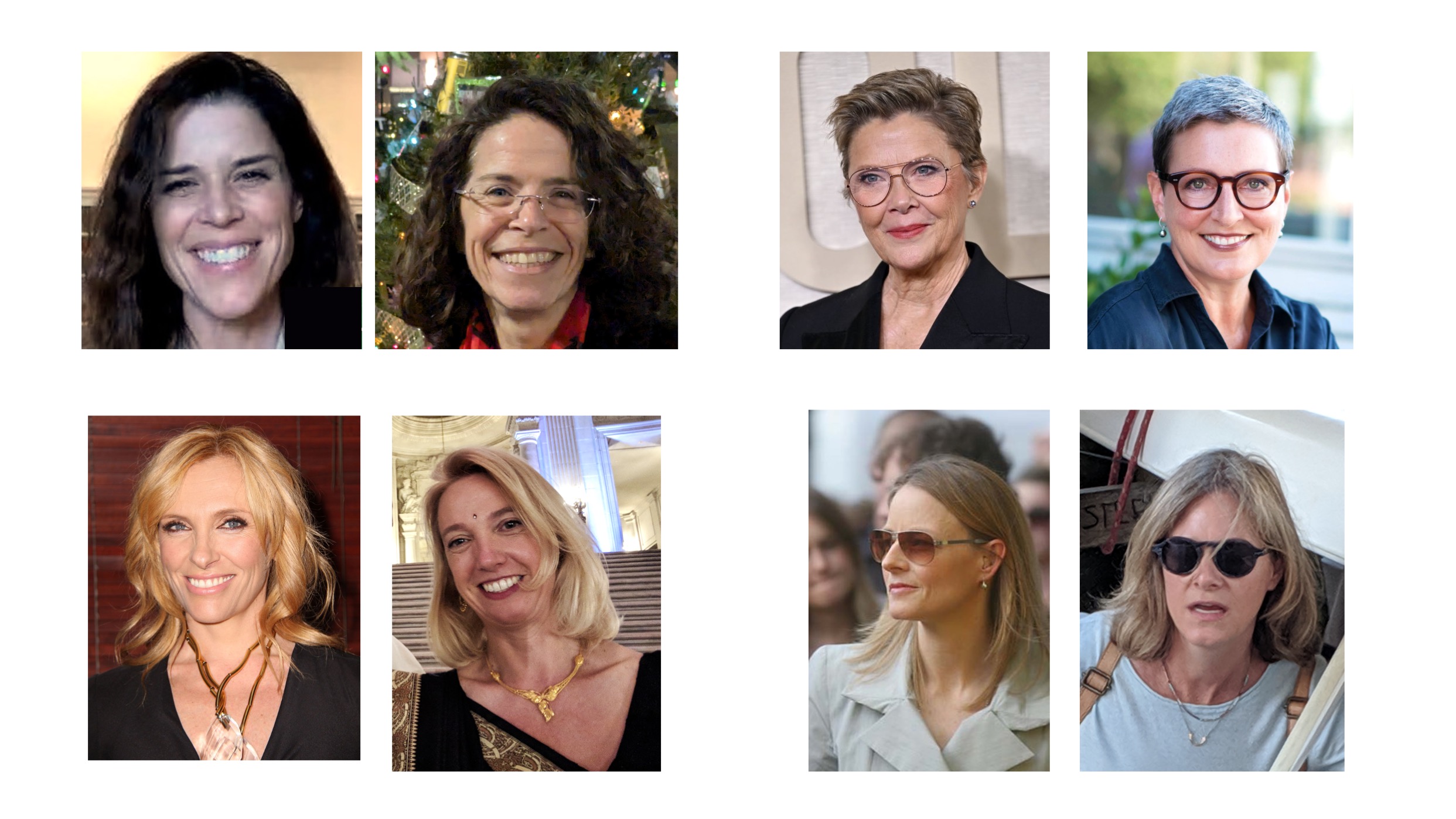
We were thrilled to have everyone in attendance and of course enjoyed conversation beyond the topic of the book. We discussed holiday traditions, children, family, pets, travel, and even actress look-alikes:
Neve Campbell -> Amy
In November, we met to discuss Karen's pick, Headshot by Rita Bullwinkel. The novel is structured like a sports tournament, with each chapter representing a match between two young women boxers. In fact, before the book begins, there is a bracket with the names of the teenagers who face each other. The author even fills in the names of the later matches so the author is aware that the reader will know who wins the first round of fights.
The book inspired quite a bit of discussion. In general we liked the fresh topic, interesting structure, and writing style of book. However, the physical violence of boxing disturbed some readers. We agreed that the structure was interesting. The flow of each chapter reflected the act of fighting. As the girls found gaps in the bodily form of the other and took opportunities to hit each other back and forth, likewise, the point of view of the narrative shifts back and forth between the characters. As each fight unfolds, we observe the inner thoughts of the two boxers, their back stories, motivating influences, and even future stories including the their occupations, relationships, and attitudes. Interestingly, many of the characters hardly remember the time of their lives detailed in the book. In a sense, we start to understand how each character is fighting her own demons in the ring.
The setting was also a topic of discussion. The ring is in a run-down building in Reno with half-interested and sometimes shared coaches. The winner trophy is cheap and can hardly hold water. The reader gets an understanding of the lack of support for this women's sport and the girls' deep determination just to be present at this tournament. Overall, we gave it a thumbs up.
As with all bookclubs, we ended our meeting catching up with each other and discussing current events such as the upcoming election and more personal topics. We missed Liz and hope to see her at the next bookclub, which will be the final meeting of the year (where did the year go?)
In September, we met at Cathy's house to discuss Amy's pick Apples Never Fall by Liane Moriarty. In the novel, Joy Delaney, wife of Stan Delaney and mother of four adult children, goes missing. The story is told by many different narrators revealing mysterious details and uncovering memories that make the reader wonder whether or not Stan is guilty of foul play. Stan and Joy ran a successful tennis academy for decades but heated emotions about past events start to come to the forefront and shed new light on old relationships. And what about the strange woman who Joy informally adopts after showing up on the Delaney's doorstep one night? Is she a victim of domestic violence or a crafty schemer, as some of the children suspect? By the time the reader gets to the end, we learn the truth, not just about what happened but the true essence of what makes each character tick.
The book was generally well received. We enjoyed that it was a captivating page-turner with many surprises along the way. It was like several books in one. In the first part, the mystery is set up and we get a glimpse of how each character portrays her or himself. Then, in the middle, we start to understand how the main characters actually are, and in the end, we see the resolution. Also, the details contributed in many ways and were all buttoned up at the end, such as the sliding magnet, paper-shredding dog, and laundry-stealing cat. It was also a plus for tennis enthusiasts (Lisa) since tennis took on a significant role in the novel (but everything was accessible for non-tennis players as well). Even the tennis-playing styles of the characters lent to their own character development.
Some critiques were that the book was rather long, the constant change of narrator could become dizzying, and that as mystery/thriller/police-procedural books go, this one was kind of tame. It really was more about the character development than the mystery.
We discussed different characters and what we thought of their behavior, for example, we explored a key secret of Joy's, why she did what she, and whether we agreed with her decision. We talked about Stan and his motivations, all of the adult children, and of course Savannah. All in all, the book led to a very focused discussion and inspired many of us to read some of Moriarty's other works.
We were sad that Liz had to miss the call and hope to see her next time. Karen is up next and we are super excited to see her in person next month! Will we be able to coordinate a bookclub around her visit? We'll have to leave you in suspense.
In May, we all gathered to discuss An Absolutely Remarkable Thing by Hank Green. In the novel, dozens of ten-foot Transformer-like statues wearing samurai armor appear in cities across the world. The main character, April May who is a 23-year-old designer in New York City, discovers the first one (which she names Carl) and posts a video to YouTube with the help of her friend Andy. The video goes viral and thus begins an adventure that is part sci-fi, part puzzle, and a whole lot of public publicity, branding, and rhetoric in a millennial style pitting two views against each another: should the world trust or fear the source of these unknown statues.
The book was generally well-received. It was easy-to-read and light-hearted although the themes it addressed such as persuasion, personal impacts of social media and wealth, ethics when standing for a cause (to name just a few), were absolutely relevant to modern times. Interestingly, most did not identify or even like the main character, but it was agreed that this did not detract from enjoying the book. We had similar impressions of the other characters. For example, we all liked April May's ex-girlfriend Maya, her assistant Robin, and her parents. We also all agreed that her friend Andy was kind of a bland character who served a purpose, like an NPC.
The creativity of the author was admirable and we collectively recalled a few select scenes that caught our attention and made us think, "Ok, this is kinda crazy, but I'm along for the ride."
We discussed other details such as the benefit of solving problems collectively, the relationship between Hank Green and the author John Green (they're brothers!), and the book sequel.
We also caught up on everyone's personal lives including careers, families, siblings, and summer plans. We're looking forward to seeing each other again very soon (almost all in person) at a big birthday celebration where one of us will be turning ... ? Maybe 21? Don't pay attention to the fact that bookclub itself is almost 21. The math ain't mathing, but so what.
Our first bookclub of 2024 was Liz's pick, Lady Tan's Circle of Women a historical novel by Lisa See. In the book, we follow the life of Tan Yunxian, a girl born into an elite family living in 15th-century China. After her mother's tragic death, Yunxian goes to live with her grandparents who prepare her to be a physician. She befriends a mid-wife in training and the two share an intimate friendship as they move through different phases of life together.
The book was generally well received with the usual mix of some reading and some listening to the audio book. We discussed historical accuracy including what happened to the medical book that Lady Tan wrote. We explored the tension between the author writing as a modern woman about a woman living in a traditional setting but wanting to move toward a more modern and independent life. It was interesting because some thought the character was too modern in her views to be believable while others thought the opposite. We talked about some of the ancient perspectives on medicine and how eastern views influence today's medical field including acupuncture, wholistic doctors, doctors of osteopathy, and Ayurveda. Related to this, we discussed how the topic of vaccinations were addressed by different characters in the book.
We also delved into the different relationships of the characters. We talked about the respect and intimacy between the women and how their lives complemented each other given their different classes and roles. The relationship between the main character and her mother-in-law was also a topic of conversation leading us to share our own stories of mother-in-laws in our lives.
The twist in the book was also of interest as well as the way the author used flowery language to discuss gore of everyday life such as menstruation (moon water), birth, and parasites.
All in all, we had some engaging conversation about the book inspiring some to binge read other books by the same author.
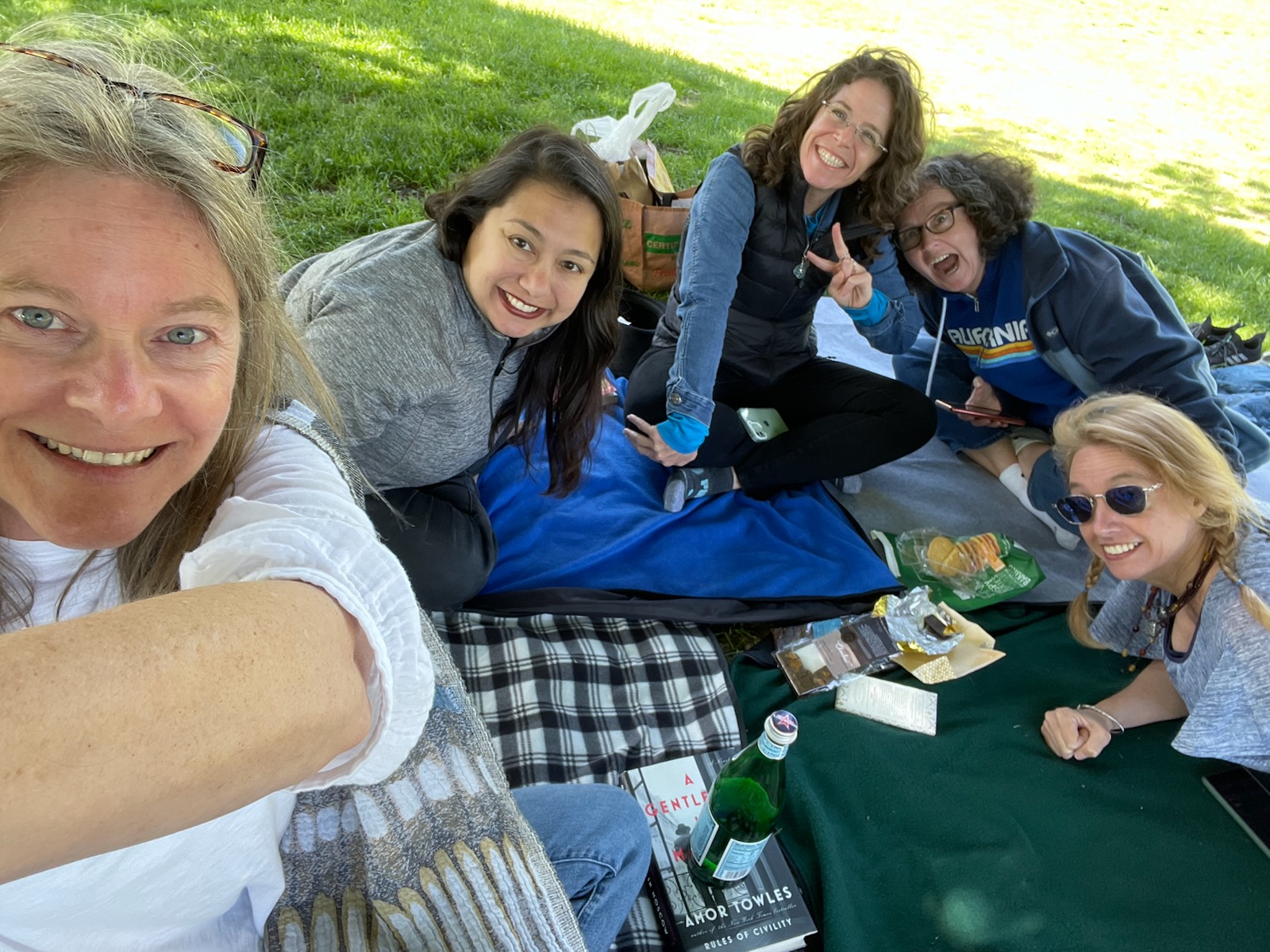
We were so happy everyone could join! After our discussion, local folks had lunch in the park with cowboy hats (?) Given the new release of Beyoncé's country single, "Texas Hold 'Em," we made up a line dance and had a "real life hoedown." What happens in bookclub, stays in bookclub, y'all.
Today we met at Rebecca's house to discuss Why Fish Don't Exist: A Story of Loss, Love, and the Hidden Order of Life by Lulu Miller. The book is difficult to classify. It is partially a biography of David Starr Jordan, a taxonomist from the late 1800s and early 1900s who eventually became the president of Stanford University. At the same time, it is partially a memoir about the author and her fascination with Jordan. Miller was deeply moved by Jordan, whose life's work was destroyed by lightening, a fire, and an earthquake and yet who continued to persevere. Miller digs deep into the writings and stories of Jordan to uncover her own understanding of what it means to live with purpose and integrity and what happens when our structured view of the world crumbles and falls apart.
The book was well-received by all. The narrative brought the reader to so many interesting places that it spoke to everyone. First, there was the educational aspect: we learned about the life of Jordan, the field of taxonomy, the poisoning of Jane Stanford, the surprising science behind why the category of fish doesn't really exist, and the uncomfortable history of eugenics in the United States. Then there was the philosophical aspect of the book: the meaning of life with and without a belief in God, the difference between attitude and delusion, the power of the individual in a society, and ethics. And then, there was the arc of the author's own story, digging herself out of depression and using her obsession over Jordan as a vehicle for self-discovery. And finally the aftermath: the result of the author telling this powerful story caused many buildings throughout the country to be renamed.
Many times, we will read a book, discuss it for twenty minutes and then move on to our own lives, but with this book, we kept coming back to different aspects of the story again and again in our conversation. We discussed ethical questions of what we would do if a fetus had a genetic disease or a condition that made them different (to some in the 1800s 'unfit') or if we knew that a child would live a short life. We related this to themes from other books and movies. Finally, after much discussion and philosophizing over a delicious mushroom lasagna with a side of roasted carrots, we talked about work, recipes, generative AI, TV, the WE manifesto, "femalism," logorrhea, and other topics. The bookclub eventually morphed into yoga and a dance party.
In a deep fake, the picture above shows both Karen and Lisa as if they were on the same call, when in fact, they got on and off at different times. We didn't photoshop Liz in because she couldn't make it and that would have been too far from reality - but we were thinking of her and send her our love. Thanks everyone for the great read and amazing bookclub!
For our second meeting in September, we met in person (with Liz!) at the Crepevine and discussed Nina Totenberg's Dinners with Ruth: A Memoir on the Power of Friendships. The memoir describes Totenberg's career as an American legal affairs correspondent for National Public Radio and her personal life including close friendships with Cokie Roberts and of course Ruth Bader Ginsburg. In the book, the reader learns interesting stories about Totenberg's challenges as a woman reporter, the first time Totenberg and RBG met, her difficult time tending to her ill first husband, and supporting RBG when her husband died, just to name a few. The book includes pictures of Totenberg with her family, RBG, and other famous people, and the audio book, as read by the author, includes some musical excerpts of her father playing the violin.
We all enjoyed the book. Some minor critiques were that we assumed it would be more about RBG than it actually was and there was an awful lot of name dropping, but let's face it, Totenberg has a lot of friends who happen to be famous. The stories were genuine and inspiring. Some that stood out the most for us were the blatant sexism Totenberg faced as a young journalist, the discussions she and RBG would have at dinner while the young interns watched, her support of Cokie Roberts as she fought cancer, and a beautiful poem.
We had some interesting discussions ourselves on topics including politics, career. children, a closed caption invention, TMI, and ChatGPT.
After lunch, we enjoyed strolling around downtown on a gorgeous, sunny afternoon. We were sorry to miss Karen and Cathy. Next time!
We spent a lovely afternoon by the pool at Lisa's house to discuss Before the Coffee Gets Cold by Toshikazu Kawagunchi. The setting of the novel is a coffeeshop in a back alley in the streets of Tokyo. There is something very special about this coffeeshop. If you sit in the right seat, you can be asked to be transported back in time! But there's a catch: you have to come back before your coffee gets cold. Actually, there are other catches, like sometimes there's a ghost in the seat, but learning these rules is part of the fun. The novel develops several story lines, each with a character wanting to bend the linear trajectory of time to help with a relationship. In the book, we encountered a young woman wanting to talk to her departed lover, estranged sisters, a wife wanting to see her husband before his memory is ravaged by Alzheimer's Disease, and a mother wondering about her child.
Reactions to the book were mixed. Some struggled with the awkward translation into English and questions about the storyline while others were touched by the deep human relationships and excited to get their hands on the sequel. Some interesting conversations ensued for example, the role of Japanese versus American culture in the reader's reaction to the plot, quiet silence versus rebellion, and how personalities are molded or not molded by environment.
September will be another rare occurrence of two bookclub meetings in one month - wow. We're looking forward to seeing Liz, who we miss so much.
In the spring 2023, we read Amy's pick, The Startup Wife by Tahmima Anam. The novel is narrated by a young graduate student who falls in love with her high school crush and begins a business with him and his best friend. The story takes the reader through the fast-paced life-cycle of a startup, beginning with a nascent product idea (developed in the basement) to a full-blown company with hundreds of thousands of users across the world. Along the way, we see the main character struggle with her own role in the company, her assumptions about marriage, ethical decision making, and her own identity.
The premise of the book was actually something we all lived first-hand, having all met at a startup in the late 90s and early 2000s. Although the purpose of the book was to poke fun at startup culture, for some, reliving the startup scene was a bit too much. We reminisced about our many memories from our own startup experience and also had some interesting discussions about the narrator's perspective and attitudes about herself, her marriage, and societal roles and how these changed as her character developed.
We spent the day outside at a park and enjoyed the beautiful weather, delicious dim sum, and wonderful company. In our many hours together, we relayed stories, supported each other in personal struggles, discussed plans for the future, and laughed and laughed. Now, we just need Karen and Liz.
As investors consider the worth of startup ventures by evaluating revenue streams and growth rates, we have come away with something far more valuable: deep friendships that have lasted for decades and will see us through our entire lives.
In February 2023, we read Pema Chödrön's When Things Fall Apart: Heart Advice for Difficult Times. Chödrön is a Buddhist teacher who gave a series of lectures between 1987 and 1994, forming the basis of the book. Each chapter focuses on a Buddhist teaching that we can all apply to life whether on the Buddhist path or not. For example, one teaching was about the concept of tonglen, meaning sending and receiving, which is a practice of first accepting pain instead of our instinct of resisting and rejecting it and then sending out love and compassion.
In the preface, there was some mention of an editor deciding that there was enough material from lecture tapes to create a book, and some questioned the judgment of this editor because some concepts were repeated and there could have been a stronger arc across all the lectures. We liked the concrete stories, for example, one was about a man and a snake and another about a girl's nightmares, and we craved more of these, but all in all, each of us got something meaningful out of the lectures.
The book inspired heart-felt discussions about the impermanence of life, knowing how you want to behave but then falling short in the moment, the art of doing the opposite of what you habitually do, the art of remaining calm, treasured material things and much more. We also deviated from the book and talked about electric cars, discussed how we would live life differently if we knew we only had 10 more years, had a push-up competition, and celebrated Amy's birthday!
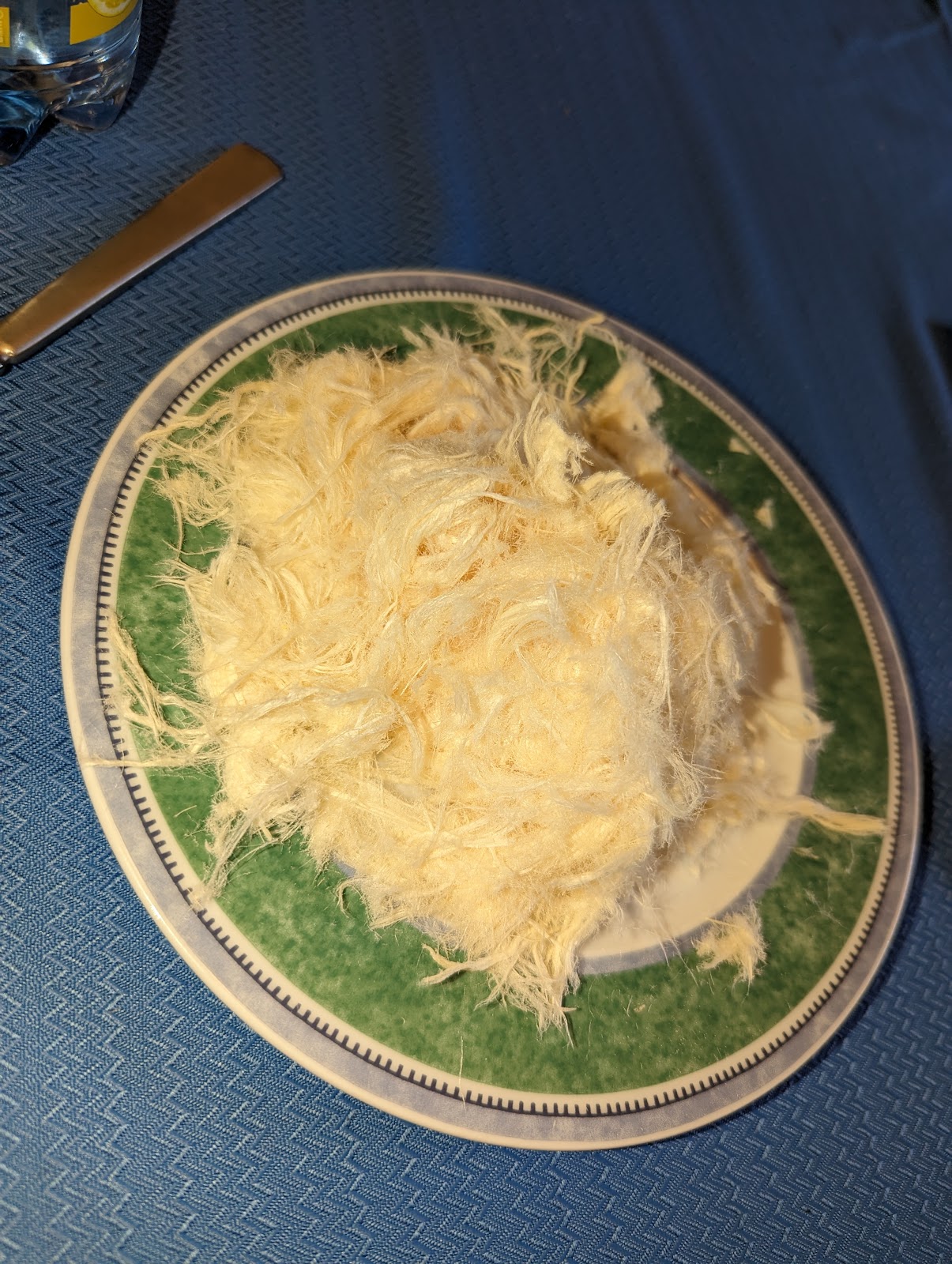
We enjoyed delicious dim sum, fresh-baked bread, birthday cake, and a Turkish dessert delicacy called pismaniye.
Redefining Realness is a memoir recounting the story of how the author, who was born a boy, learns to embrace her identity as a girl and how she eventually establishes herself as a successful black/Hawaiian woman with a career and loving husband. Through her stories, we catch a glimpse of the overwhelming challenges she faced living in poverty, raised by single parents, misunderstood, abused, and shunned. As a reader, we see these matter-of-fact stories not through the lens of a victim but a survivor.
Although the book was difficult to read at times given the trials faced by the author, it was well received. It was eye-opening for many in terms of how transwomen think about their identities especially from a young age. It also shed light on more subtle dynamics, for example, bias within the LGBTQ community itself.
The book surfaced many topics, for example, how gender exploration is different for our children's generation and how even if we think we are accepting, some of our own reactions and thoughts can surprise us.
Thanks to Lisa for cooking up a delicious lunch!
Most viewed the book as a solid reference, although some enjoyed the style of writing more than others. Corinna has been described as many things, but reserved is probably not one of them. We appreciated that the book was thorough, addressed the topic from many different angles, and emphasized that there was no one right way to do menopause.
We discussed how menopause has been treated historically including delving into our own family histories with what our mothers and other family members talked about with us and importantly what they didn't talk about.
Beyond the book, I think we all appreciate the close connection we have with one another, which allows us to openly talk about these issues and never feel alone.
Reception of the book was positive. Although some thought the humor was a bit forced at times, we liked how the storylines of the characters interweaved with each other. We also thought it was interesting how the author tested our biases.
We had a hybrid in-person and on-line meeting. The covid virus is mutating into variants, so the folks meeting in person were outside (in Rebecca's lovely backyard) and sometimes wore masks. Unfortunately, Lisa could not join us because she was enjoying the US Open in NY with her mom. Hopefully, we'll all meet in person some day in the future. Until then, everyone stay safe out there.
Our bookclub in June was a momentous occasion with five of us meeting in person! Yay for vaccines.
Lisa's pick for June was You'll Never Believe What Happened to Lacey: Crazy Stories about Racism by Amber Ruffin and Lacey Lamar. These stories were crazy. They were told in a light-hearted, humorous way, but it was shocking to see how rampant racism is in society today. These true anecdotes ranged from white people not being able to tell black people apart to heartbreaking tails of calculated sabotage. Time and again the authors had to convince whites that they had money, were educated, and were successful because of their own talents and capabilities. The sheer number of these stories underscored how blacks have to deal with these issues every. single. day.
We discussed how although there is greater awareness now after the George Floyd protests, some blacks in the workplace are being asked to lead discussion groups and workshops on racism and diversity - this might seem like a good thing, but they are being asked to do these tasks in addition to their jobs without additional pay. Again, whites are placing the burden on blacks. We also talked about positive trends in education for our own children but how many don't believe racism still exists.
As usual we branched into other topics including vaccines, children, parents, pets, careers, television, books, menopause, simulation theory, and much more. And of course, there was food. Go bookclub!